This post is a collective contribution from the Unruly Natures project team. The Unruly Natures project is an ongoing collaborative research project which aims to study socio-natural subjectivities, promote transdisciplinary conversations, and organise innovative ecopolitical initiatives. This piece is part of a series produced in the run-up to the infoclio.ch 2026 conference, 'New Humanities'. The series showcases recent projects and reflections, particularly in the fields of posthumanism, relational approaches in the humanities and social sciences, and alliances between the arts and sciences.
Contribution by Flurina Gradin, Federico Luisetti, Rony Emmenegger, Emiliano Guaraldo, Christoph Miler
Switzerland, Upper Valais, September 14, 2021:
It was just at the end of our first day when we were on our way back from the dinner in Geschinen and our thoughts meandered around our experiences of walking beneath 4000m of mountain rock, marveling at huge mineral rock crystals, being in awe of the scale of human-made hydroelectric infrastructures in the middle of an otherworldly landscape that seemed to exist only in a range of light mint green and grey brownish colors. There were four of us squeezed into one of the cars, chatting about our first impressions of the field trip, when someone warned us to watch out for the “fox” about to cross the road. We all quickly leaned forward and two of our colleagues were so familiar with the physiognomy of the animal that they recognized the scale, shape, colors, and movements immediately. Instead of a fox, we were in the company of a wolf. Just a few hours earlier that day, some of us had chatted about the wolf’s return to Switzerland and its presence in the Upper Valais specifically. We joked about the chance of seeing a wolf during our trip in the days ahead. But out of the blue, just before the first day ended and only for a split second in our car’s light cones, we caught a glimpse of a wolf passing.1
What are the cultural, epistemic, and sociopolitical implications of recognizing natural entities and nonhuman species as subjects? Can legal notions of identity, integrity, autonomy, and well-being be extended to them, as proponents of the rights of nature argue? Or should we instead rethink human subjectivity? In search of answers to these questions, a transdisciplinary research initiative began to take shape in September 2021. Since its inception, the Unruly Natures project has brought together a growing network of scholars from diverse disciplines. Through an ongoing series of collaborative research formats and projects, we investigate the subjects that inhabit unfamiliar spaces and endure across more-than-human timescales. Research findings are continually documented and made accessible through publications and online resources in the Unruly Natures Journal.2 The following conversation brings together perspectives and reflections from some of the group’s key members.
Federico Luisetti
You have been engaging with the politics of nature and nonhuman subjectivities for many years. Looking back, how has the Unruly Natures project shaped your work?
The Unruly Natures project emerged from a shared vision: studying the environment through existing scientific methodologies is not enough. The climate, environmental, and social crises we are experiencing compel us to rethink the meaning of nature and the environment. Above all, the so-called Global North must abandon its universalist ways of thinking and instead listen to and learn from the Global South (see For a Diplomatic Council of River Basins). Inspired by decolonial thought and by the many initiatives we have undertaken with our Unruly Natures companions, I have placed the idea of “earth-beings” at the center of my work (de la Cadena 2015, Earth Beings), seeking to understand the relationship between human and nonhuman subjectivities (Luisetti 2023).
Is there a place or an encounter in Switzerland that has shaped the way you think about human and nonhuman subjects?
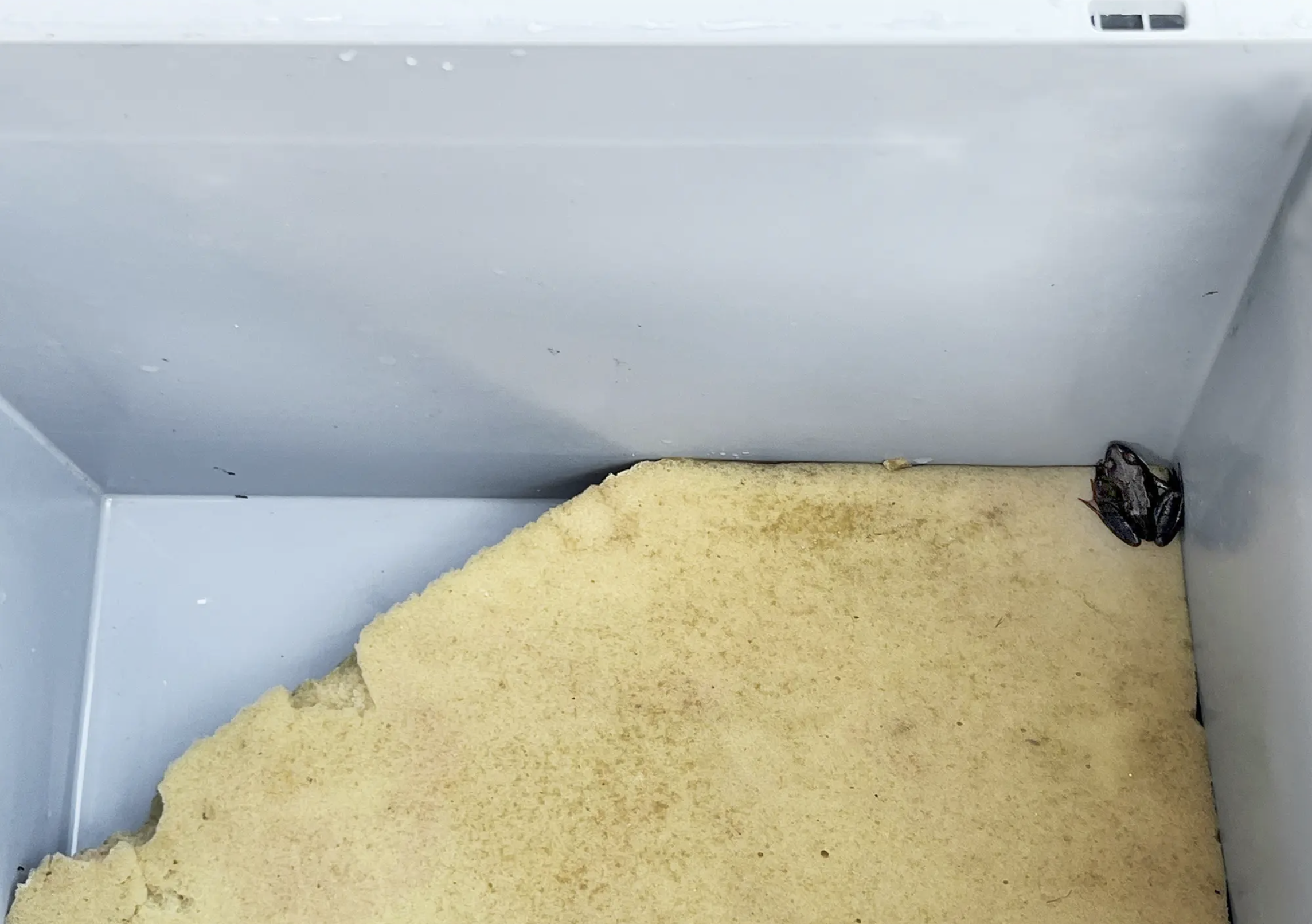
For me, such a place was the Werdhölzli wastewater treatment plant in Zurich, which we visited in September 2024 as part of a research project on ecosocial transitions carried out jointly with a Colombian team (see A River-Centered Approach). We went there to study the biosocial implications of urban infrastructure. While taking notes on the technical processes of wastewater treatment, we noticed a few seemingly out-of-place low-tech objects: a series of small wooden huts housing unassuming, closed plastic boxes. Then, with a mixture of astonishment and pity, we spotted a lonely grass frog. We had just met one of the few amphibians that, although severely debilitated, had survived the torments of Zurich’s drainage system. This encounter led me to explore the notion of “pluriversal contact zones” (de la Cadena and Escobar 2023) and rethink both human and nonhuman subjectivities within the infrastructural condition. I have written about this experience in Shared Habitats, an experimental journal founded by two members of Unruly Natures, Flurina Gradin and Christoph Miler (see The Frog and the Sewage Treatment Plant).
Emiliano Guaraldo
The Unruly Natures project initially focused on Switzerland and Central Europe, and has since expanded to other regions, for example through the collaboration with colleagues in Colombia. What has this collaboration meant for your own research and for Unruly Natures?
In 2024, we spent a week in Cali, Colombia, with a group of Colombian colleagues, researchers, and activists who had been working for several years on different river-centered, socio-ecological transition projects across the region (see A River Centered Approach). This experience has meaningfully shaped how I now see my research and its purposes. From the overlap between academic work and the activist and political practice of these groups, I learned something about concepts like conflict, autonomy, and contact zones. For me, they had normally stayed on the more abstract side of things or had perhaps served a more heuristic function. In those territories, however, they had immediate, concrete, embodied, lived dimensions. Our friends in Cali had been working with an evolving, creative critical vocabulary, repurposing and expanding academic concepts so that they could better fit their own struggles for justice and their relations to their rivers and their ecologies. This approach also shaped the internal discussions and decision-making processes within and between the teams. The same was true of objects that had long accompanied my work and that of Unruly Natures, such as infrastructures, extractive and energy transition projects, and activist art, which in the Cauca Valley had a more complicated presence and history than I had assumed, to the point of making me reconsider how I had approached them until that moment. One example of this change of perspective was my conversations with Andrea Melenje, a design researcher and artist-practitioner in the Nasa Indigenous communities of the Cauca Valley. Andrea’s work is embedded within the territorial conflicts of the region, whose violence she has experienced firsthand, and where artistic practice takes an active role in the struggles it accompanies. Yet when the art industry of the Global North takes the same kinds of work (in this case mural art and Indigenous contemporary art) out of their context at events such as the Venice Biennale or Documenta, they are detached from the struggles and violence they have witnessed and reduced to objects of consumption and epistemic extractivism.
In your experience, what role do artistic practices play in the Environmental Humanities, and what can they make visible that scientific research alone might not? And what role can the Unruly Natures project play in this regard? What stories about the ecological crisis are we most urgently missing today?
In my experience, the environmental humanities have often approached art, especially contemporary art, through methods inherited from literary and media studies, reading artworks as representations of environmental themes, or as forms of visualization of otherwise imperceptible non-human phenomena. But contemporary art has its own long-standing debates, concepts and histories that have at times anticipated some of the ideas popularized by environmental humanities scholars, albeit with a completely different set of languages and methods. Artists and designers are also often active participants in the actual socio-ecological struggles of the spaces they live in, in ways that exceed what traditional academia (even when interdisciplinary) can do. I spent some years in Venice, where artists and creative practitioners are among the most visible voices pushing back against the various forms of socio-ecological degradation affecting the lagoon and the transformations imposed by mass tourism on the city. In Venice, artists and curators organize, document, occupy spaces, work with residents, and pressure local artistic and political institutions to acknowledge their role in shaping the city’s present and future.
The stories I find most urgently missing today are those erased from official histories in order to justify the expansion of the global extractive capital’s reach; Unruly Natures can be a place to recover them with artists, as in the conversation with Carolina Caycedo on the archival images through which she builds an “environmental historical memory” of the dammed Snake River (see Reciprocal Sacrifice). I have also recently been in dialogue with two artists (Adelita Husni-Bey and Elena Mazzi) whose work tries to counter such erasure in different ways. Adelita Husni-Bey’s Like a Flood, for instance, returns to Italian colonialism in Libya by establishing a different, corporeal relation to the archival images that preserve that history (Fototeca IsIAO, the photographic archive of the former Istituto Italiano per l’Africa e l’Oriente). Mazzi’s Silver Rights (2021), made with the Mapuche spiritual leader and silversmith Mauro Millán, is an attempt to counter the musealization of the Mapuche at the Leleque Museum, which Benetton opened in 2000 on its Patagonian lands and where they are presented as an extinct people of the past, a product of the terricidal imagination of both the Italian corporation and the Argentinian state.
Rony Emmenegger
In your research as a political geographer, you explore the geological disposal of radioactive waste and the political negotiations between citizens and experts. In what ways, if at all, has your involvement in Unruly Natures shaped how you approach these negotiations?
Geological disposal is a project that relies heavily on geoscientific knowledge and epistemologies to make projections about the future and substantiate the promise that long-term containment of radioactive waste in a so-called “host rock” is possible. And yet, engagement with new materialist and posthumanist scholarship has led me to question the assumption that the underground can be simply controlled or territorialized. Instead, I have come to acknowledge the inherent vitality of the Earth - not only in dynamic ecosystems at the surface as in the case of colleagues - but also in a seemingly inert, not to say ‘dead,’ subterranean environment.
My involvement in the Unruly Natures project has certainly fostered this sensitivity to the inherent uncertainties and dynamism of a project like geological disposal, both in terms of future projections and the human–nonhuman encounters it entails. For my research as a political geographer, this has profound implications: it has sharpened my eye for the ways in which the underground—its past, present, and future—comes to matter, both metaphorically and literally. In my ethnographic research on geological disposal in Switzerland, this has largely been an empirical endeavor in which I have scrutinized how rocks, too, have played a key role in political negotiations between experts and citizens, as they came to speak as what Federico Luisetti has depicted as “nonhuman subjects” (Luisetti 2023). Most recently, Federico Luisetti and I have illustrated this in our analysis of the menhir, a thirty-ton boulder placed by a farmer in resistance to geological disposal plans on his land, which indeed destabilized the political landscape profoundly (Emmenegger & Luisetti 2026).
How do you think about nonhuman temporalities in your research, and what role can a project like Unruly Natures play in this?
This is particularly relevant to me, given that geological disposal projects envision the safe containment of radioactive waste for up to one million years. In my research, I am concerned with the question of how such long timeframes can be perceived and conceived. It is often argued that this planning horizon is extraordinarily long from a human perspective yet represents only a tiny moment on geological timescales. While the Earth certainly has its own temporality, the distinction between human and geological time also serves a political purpose: it establishes the geos as the epistemic territory of geologists, who are trained to reckon with deep time and authorized to realize geological disposal projects. In such projects, this separation goes hand in hand with the assertion that deep time extends far beyond what humans can cognitively grasp, thereby delegitimizing citizens’ claims to knowledge about the future of radioactive waste and the geological repository designed for its containment.
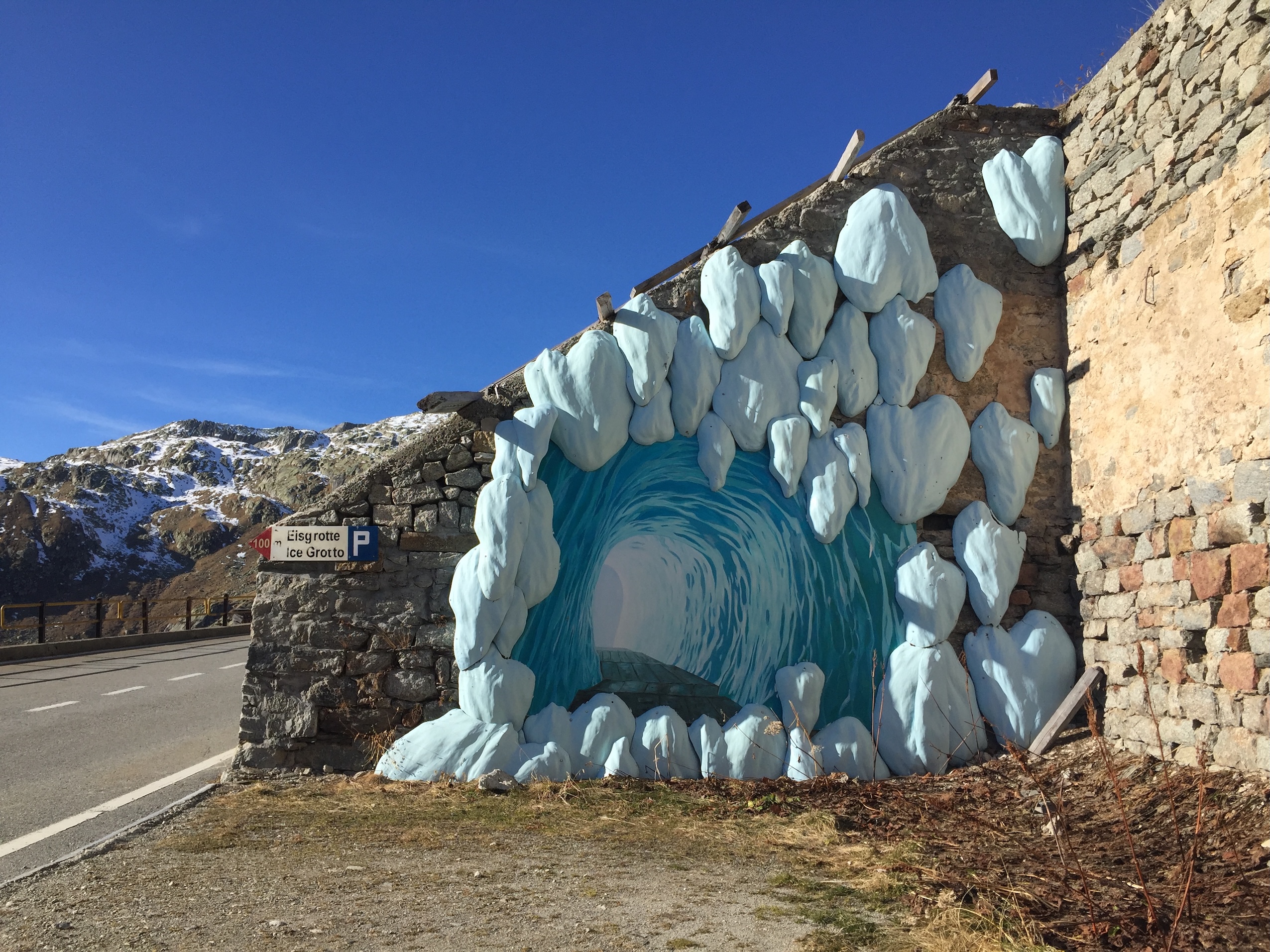
In my view, this divide between experts and citizens over temporal imaginaries is not only problematic but also puzzling. It is puzzling because geology is not quite the objective science it is often portrayed as being. As a scientific discipline, it has long relied on geologists’ embodied fieldwork experiences to “decipher” the Earth and its deep-time history at outcrops and through rocks. This is also where the Unruly Natures project becomes significant, as it fundamentally challenges assumptions about an objective Earth that can be researched, known, governed and controlled. Instead, it aims to sharpen our sensitivity to embodied encounters with the Earth, rocks, and other materials, inviting us to feel and listen to what Adam Bobbette (2023) has described as “the Pulse of the Earth.” Obviously, the heartbeat of the Earth might be much slower than that of the human body. Nevertheless, it vibrates and leaves traces, sometimes more and sometimes less perceptibly, as participants in the Unruly Natures field trip to the rock laboratory at Mount Grimsel could learn (see The Grimsel Rock Laboratory and the Crystal Cave)—or, perhaps more aptly, feel and sense.
Christoph Miler
Over the past few years, the Unruly Natures project has repeatedly explored specific conditions of environments and timelines that can be geographically located but are not necessarily understood as part of larger cycles, systems, and networks of interdependence. Your own work as a designer and researcher is also shaped, on several levels, by processes of making the “invisible” or the “not yet imaginable” visible. How has your involvement in Unruly Natures shaped and connected with your own work?
In my work as a designer and artistic researcher, I’m interested in approaching environments from multiple perspectives. Applying different modes of research, theoretical, artistic, and journalistic, helps me engage with the multi-layered nature and complex interdependencies of places, ecologies, and subjects. Doing research in such a transdisciplinary way could mean, for instance, seeing an inconspicuous group of trees in the city of Zurich through the practices and theories of walking, archival research, military history, and political ecology, such as in my essay on the toxicity of Swiss shooting ranges (see Stray Shots) it could mean studying the environmental dimension of data centers by bringing algorithmic spaces and river ecologies into dialogue through film, writing, and photography (see Tomorrow: Mostly Cloudy).
Looking back at my attempt to engage with complexity and plurality in my work, Unruly Natures’ practices have widened my repertoire of research methods and perspectives. Situated, sensory and embodied modes of experiencing a place have started to play a bigger role in my work. Similarly, our conversations, workshops, and field trips have encouraged me to engage with various forms of literature, poetry, and speculative fiction as inspiring forms of reflection. Working at the intersection of fieldwork, fiction, and theory seems increasingly helpful for experimenting with novel modes of expression and overcoming epistemic limitations of disciplinary boundaries. Hopefully, approaching things from such a transdisciplinary position allows our group to come a bit closer to what director Werner Herzog has called poetic truth. This is not a positivist or factual form of truth, yet a “deeper strata of truth”, which can “be reached only through fabrication and imagination”. In a similar vein, Joost de Bloois, one of our collaborators, has framed the mixture of “creative non-fiction, public sociology and investigative journalism” (see Unruly Reportage).
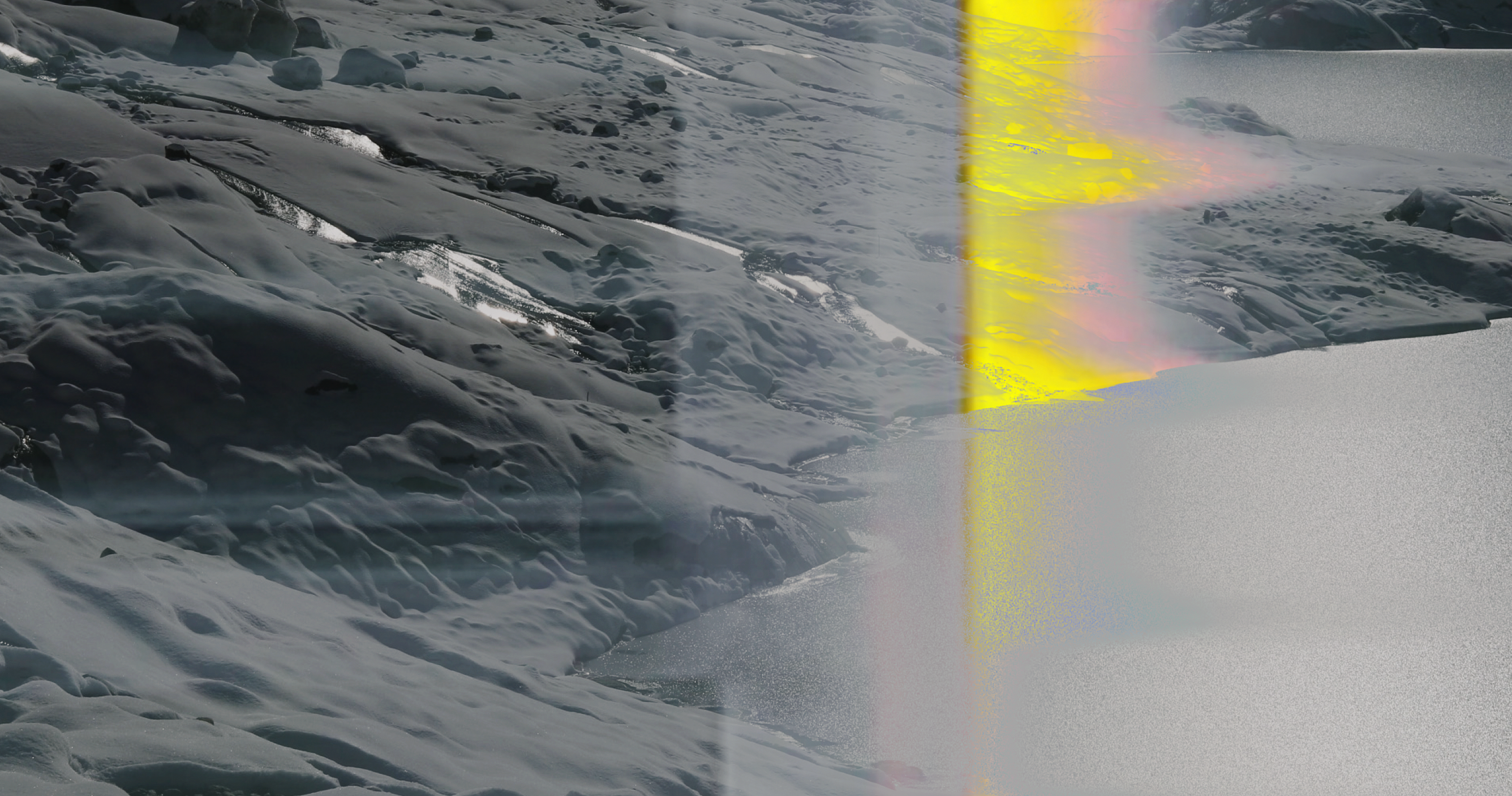
How can socioecological enmeshments be made tangible, experiential, and open to negotiation and how can spatial relationships be made comprehensible? Which experiences, tools, and theories do you consider particularly relevant or exciting within the Unruly Natures project for exploring and unpacking such relations?
A classical answer to the problem of representing spatial relationships would be “maps”. Since the Scientific Revolution, and especially since the Enlightenment, maps are considered a major tool for visualizing, classifying, and describing space and its dynamics. Yet traditional cartographic approaches come with a set of limitations. Distortions, biases, and power relations are part and parcel of them—just think of the classical map that uses the Mercator projection, which usually shows Europe in the center of the world and depicts Africa the same size as Greenland, while the former is actually twelve times larger.
To challenge and expand the classical map as an expression of a Cartesian subject, I prefer to think in terms of countermapping strategies that open new possibilities for encountering a place and narrating its characteristics and enmeshments. Thereby the resulting ‘mappings’ are not enforcing a graphic, abstract birds-eye view on the territory, yet might include the usage of photography, poetry, painting, walks, and even sound to reflect on and tune into the place one has encountered (see for example here quAA’r-qu-qu-QuAa’rr’-qI-qI-QuiAa’r’r). I think of approaches like this when I think of the Unruly Natures project. There is theory and a certain degree of abstraction that comes with it, yes; yet there is also the aim to explore the physical territory, which is the moment you decide to turn away from the map and its crystal-clear lines and step into the muddiness of the material world to complicate and enrich your relationship with it.
Flurina Gradin
If you reflect on the past few years of the project Unruly Natures, what role does bodily experience play in how you engage with environments?
As a designer and urban ecologist, my work constantly confronts me with the need to negotiate habitats not merely as abstract objects of research, but as very real and fragile conditions for our own existence and that of other living beings. I am interested in the intersection of theory and practice, and how they are experienced in everyday life amid the unavoidable, ever-changing reality of cohabitation on planet Earth. Initiating the Unruly Natures project together with Federico Luisetti and other colleagues provided a welcoming space to actively provoke, test and negotiate such confrontations with an open end.
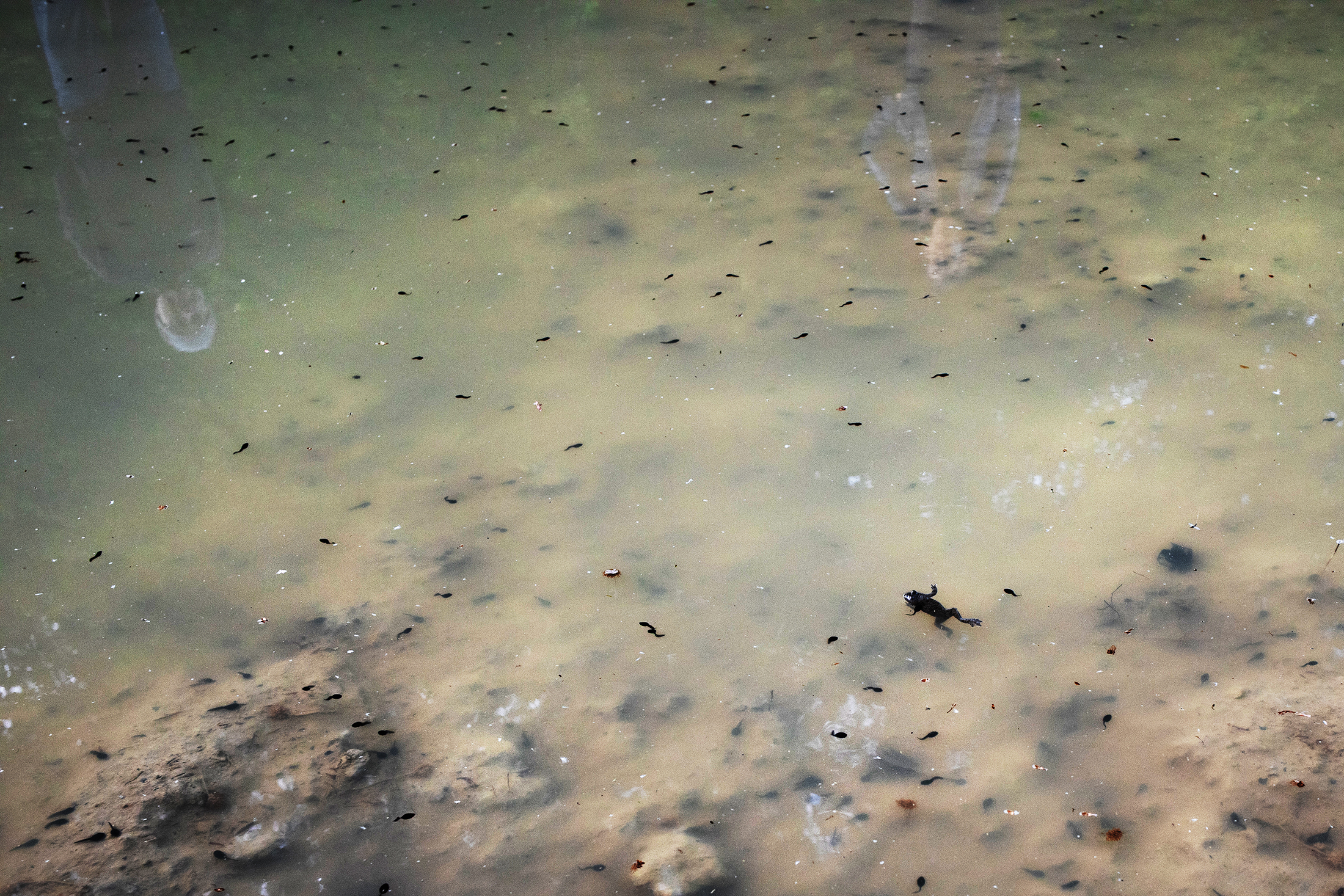
Many of the activities within Unruly Natures revolve around the concept of relational ontology, as articulated by Arturo Escobar in his book Designs for the Pluriverse (2018). This approach encompasses both different ways of seeing the world and different ways of world-making. Escobar formulates the principle as “Nothing preexists the relations that constitute it” (Escobar 2018, 101) and observes a “deep connection between action and experience” (101). When it comes to translating this approach of ontological thickness into a practice of experiential research on the complexity and multilayeredness of environments, embodied ways of knowledge production and genuine embodiment in research seem to become central points of action. For Unruly Natures, this also inherently involves critically reflecting on these experiences together with others. What does it really mean in practice to experience and engage with subjects such as an endangered piece of forest (see Unruly Grüningen), a track field (see Toad Calls from the Track Field), or a lagoon landscape (see Attuning to Intertidal Zones) by moving through it, listening to its sounds, and responding to its material conditions? Opening a dialogue for such deeply embodied experiences and unpredictable ways of knowledge production differs fundamentally from studying it exclusively through maps or scientific data.
What does transdisciplinary practice mean in the context of Unruly Natures?
The various initiatives around Unruly Natures seek to create a growing assemblage of work in which different ways of professional and personal expertise, knowing, experiencing, and engaging with the world can coexist without necessarily having to converge into a single, unified understanding. In this sense, the commitment to transdisciplinarity is not just a method of collaboration; it also becomes a way of questioning what constitutes knowledge and reflection in the first place. It is one key learning over the past few years of engagement for Unruly Natures that epistemic and ontological tensions between scientific «rigour», artistic freedom, and human-more-than-human environments and entanglements perhaps appear productive precisely because they cannot be completely resolved and stay to some extent unruly.
Following the thoughts of Nitin Bathla, another member of our network, such processes of researching otherwise offer opening a door to “an anticipatory, creative, and uncertain potential of research – a kind of research that is exhilarating just because of not really knowing where we are headed” (Bathla et al, 22). Thus, unpredictability can become a mere condition for discovering pathways that established methods and categories fail to recognize. Rather than eliminating surprises and the unknown unknown, Unruly Natures will hopefully continue to provide an untamed research space for various disciplinary fields, and one that inherently stands for an ongoing research process in itself.
References
Bathla, N. et. Al. (2024). Researching Otherwise: Pluriversal Methodologies for Landscape and Urban Studies. gta Verlag.
Bobbette, A. (2023). The pulse of the earth: political geology in Java. Duke University Press.
Emmenegger, R., & Luisetti, F. (2026). The menhir: aesthetic politics of radioactive waste disposal in northern Switzerland. Geographica Helvetica, 81(1), 137-153.
de la Cadena, M. (2015). Earth beings: Ecologies of practice across Andean worlds. Duke University Press.
de la Cadena, M., & Escobar, A. (2023). Notes on excess: Towards pluriversal design. In M. Tironi, M. Chilet, C. Ureta Marín, & P. Hermansen (Eds.), Design for more-than-human futures: Towards post-anthropocentric worlding (pp. 29-50). Routledge.
Escobar, A. (2018). Designs for the Pluriverse: Radical Interdependence, Autonomy, and the Making of Worlds. MNG University Presses.
Luisetti, F. (2023). Nonhuman subjects: An ecology of earth-beings. Cambridge University Press.