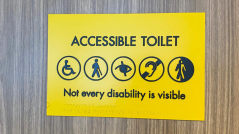
The aim of this Special Issue is to bring the histories and memories of disability into the mainstream of European history. Inspired by how historians of sexuality have sought to queer the field of memory studies, this special issue seeks to ‘disable’ existing European narratives by uncovering and integrating memories around disability and disabled citizens into European history.
What happens when we look for the memory of disability beyond Anglophone hegemonic contexts? And when we turn to markers of memory beyond statues and memorials? How can disability memory go beyond stereotypes of either the individual who ‘overcame’ their disability, or the tragic victim of ableist norms and policies? Are there instances in which the memory of disability also relates to a sense of community, joy, elation, or nurture? These and other questions stand at the core of this special issue.
Potential topics could include, but are not limited to:
- Memory through archives and archiving practices
- Memory of activist groups and protests
- Memory through deaf and other languages
- Memory through media such as music, photography, film, (video) games
- Commemoration practices
- Oral history and popular memory
- Lack of memory and archival silences
- Methodological reflections, such as on studying disability memory from an intersectional perspective
We welcome both empirical and theoretical contributions (or a combination of the two). For more information, please consult the page of the Disability History Working Group at the European University Institute: https://www.eui.eu/research-hub?id=disability-history-working-group
Please submit a title and abstract (maximum 500 words), along with a short biographical note (maximum 100 words), to Monika.Baar@eui.eu, Chiara.Lacroix@eui.eu, and Timo.Houtekamer@eui.eu.
Deadline: 31 August
Informations supplémentaires sur l'événement
Coûts de participation